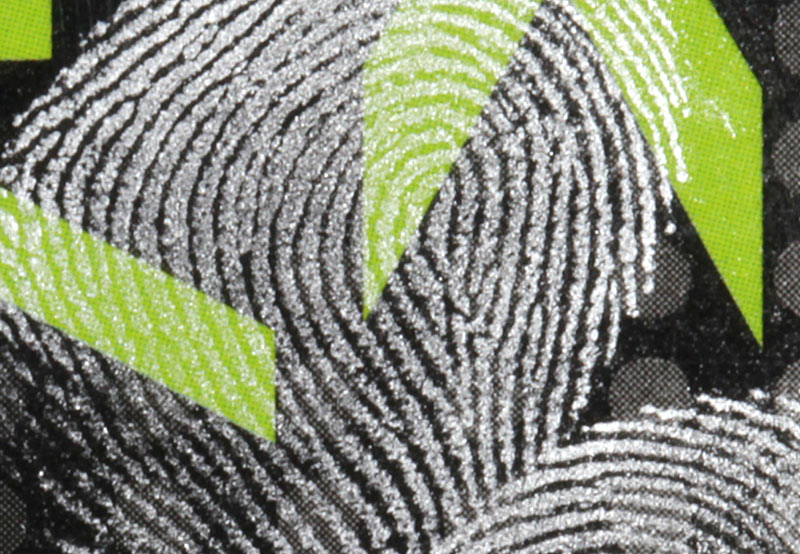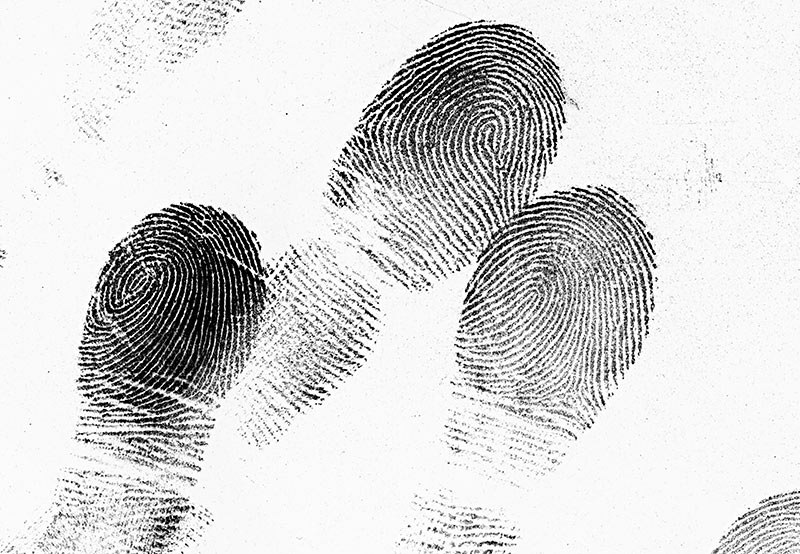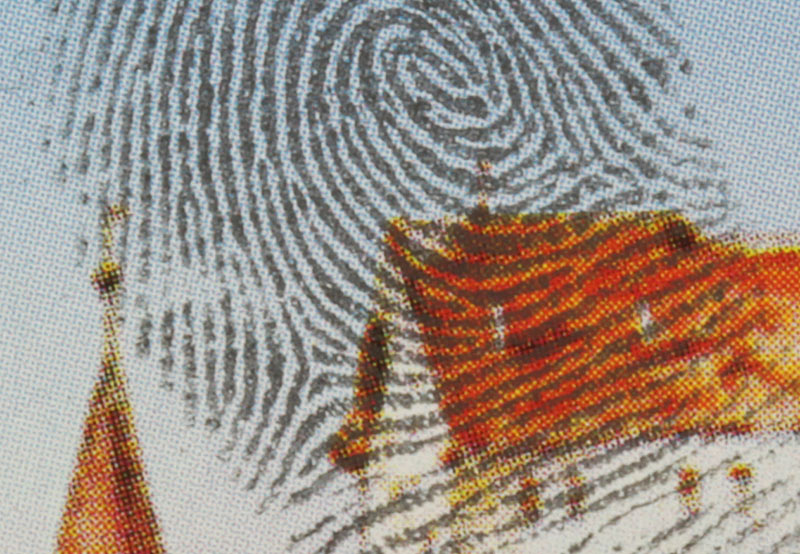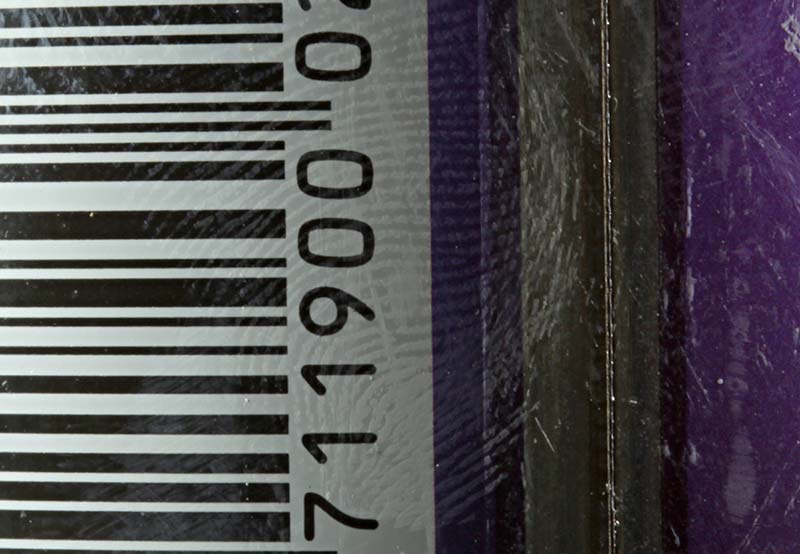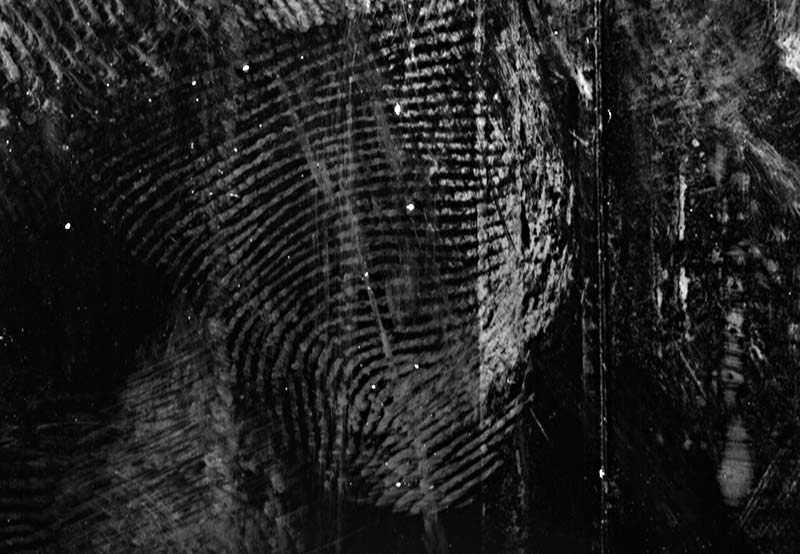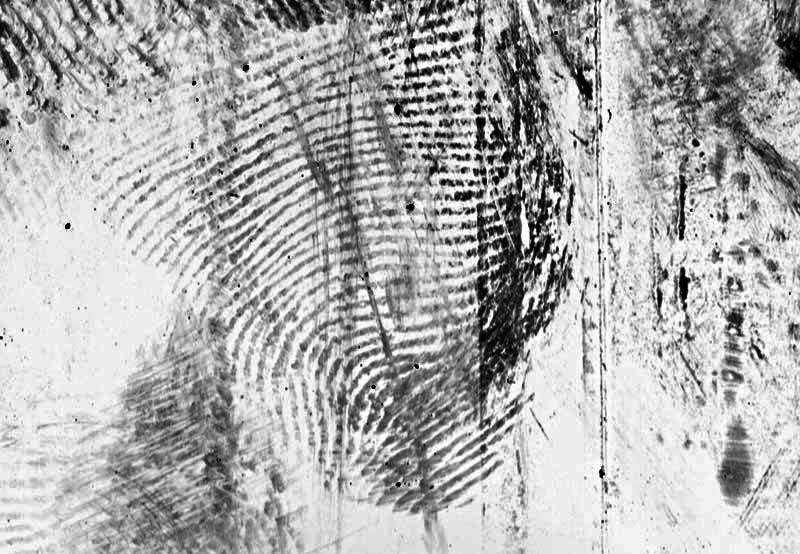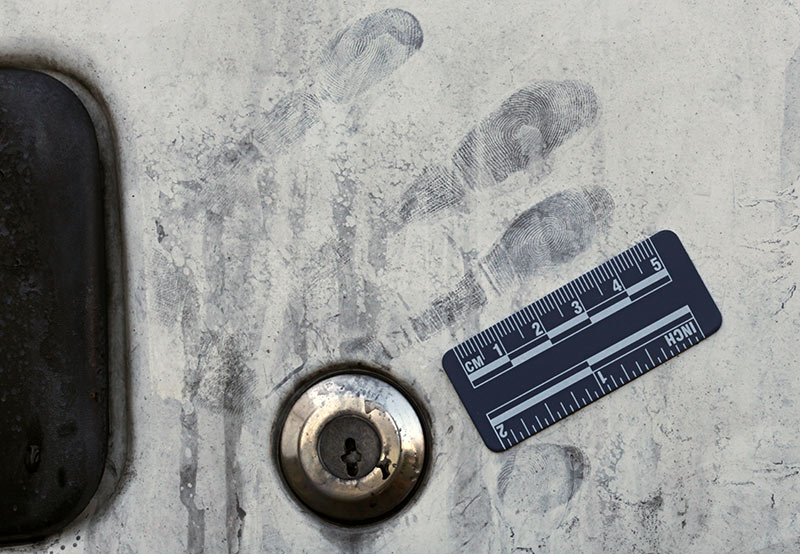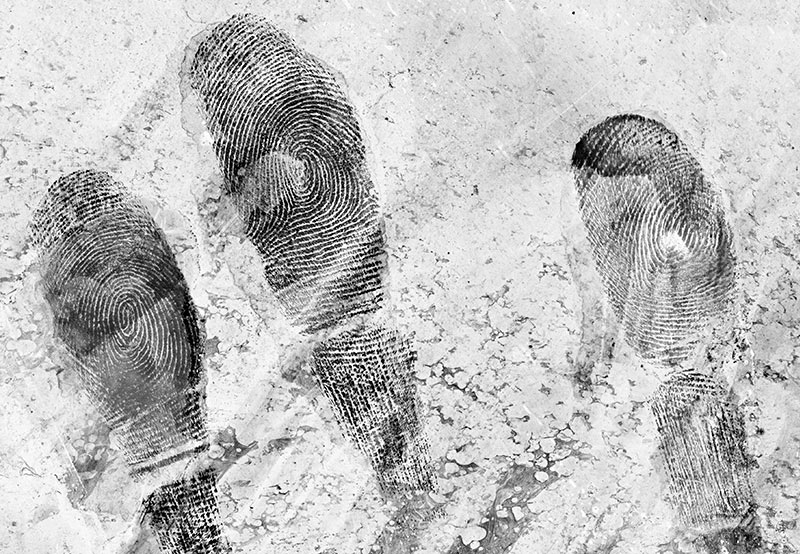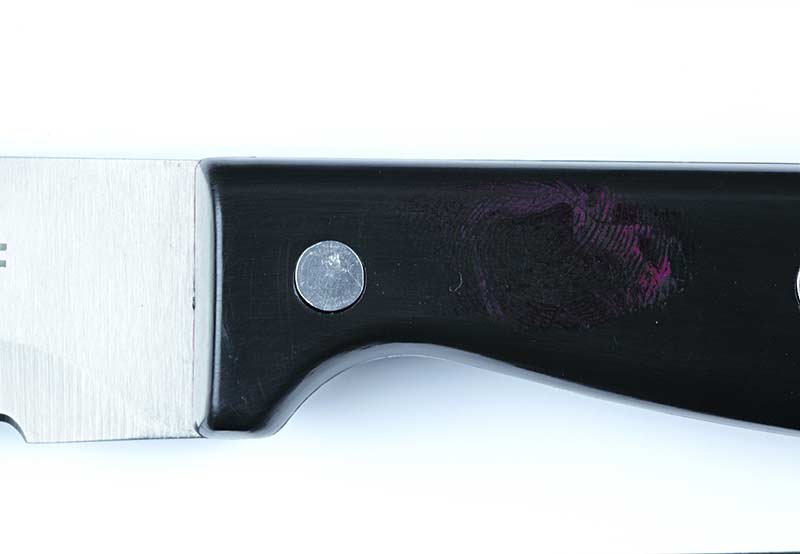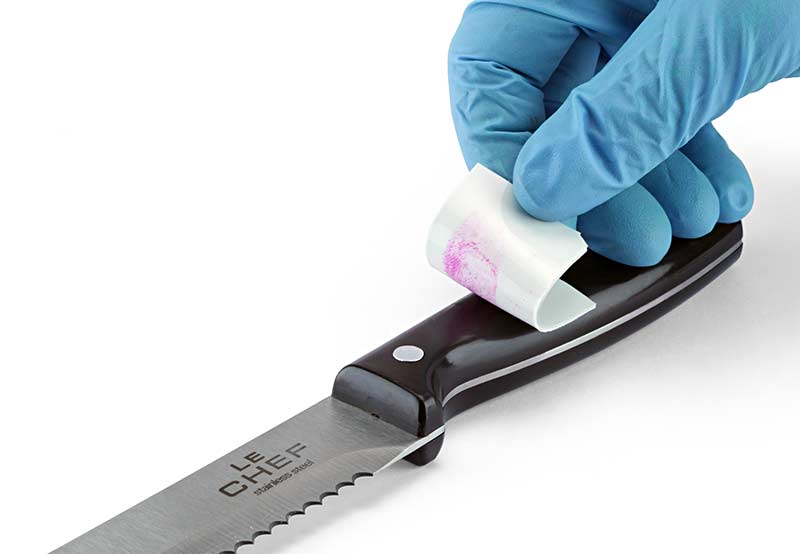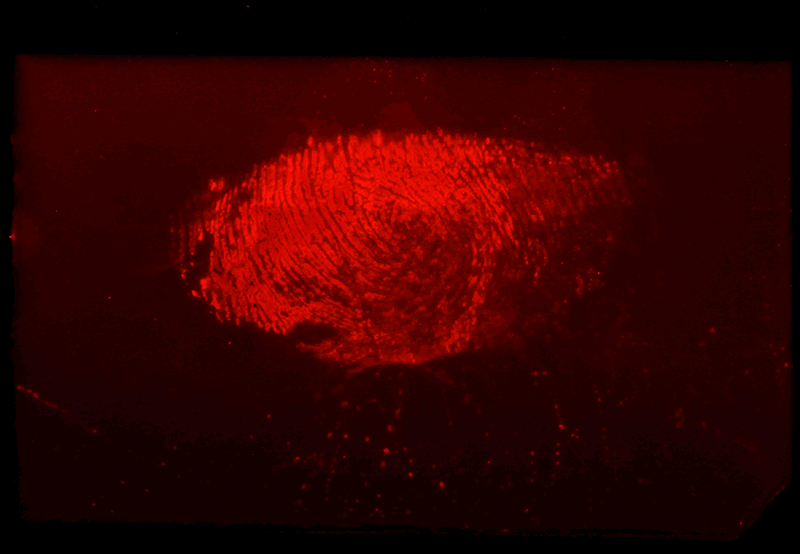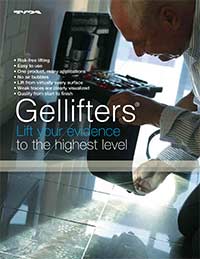

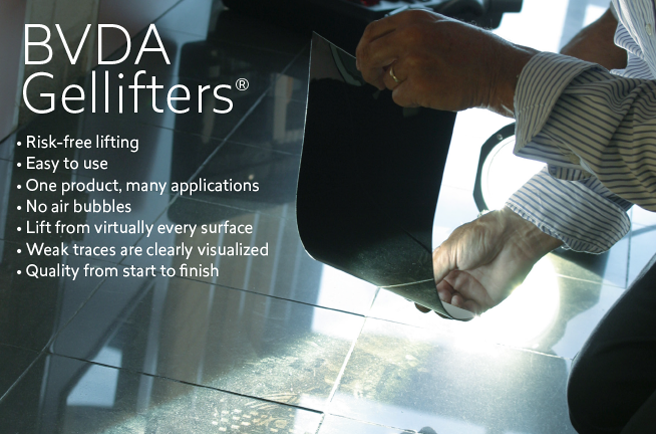
Risk-free lifting - Gellifters make it possible to lift the same print multiple times without the risk of destroying it. Also, there is minimal or no risk of damaging the surface of the exhibit.
Easy to use - The flexibility of the Gellifter makes it easy to apply on any surface. The low-tack adhesive makes it easy to remove.
One product, many applications - Lift powdered fingerprints, untreated fingerprints, fingerprints developed with cyanoacrylate, fingerprints in/on latex and vinyl gloves, shoe impressions in dust, traces in blood, dye-stained finger- and shoeprints in blood, earprints, indented writing, micro traces and fibers.
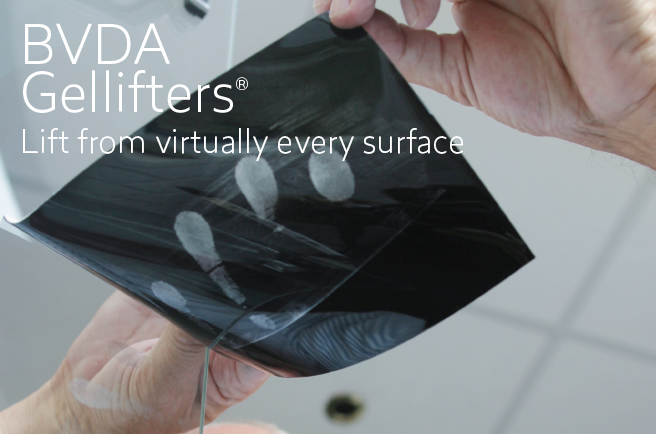
Lift from virtually every surface - Porous or non-porous, flat or curved, smooth or rough: a black, white or transparent Gellifter will do the job.
No air bubbles - The thick gelatin layer of Gellifters eliminates the risk of trapping air bubbles when lifting prints from rough surfaces. This ensures a complete lift of the print, without gaps
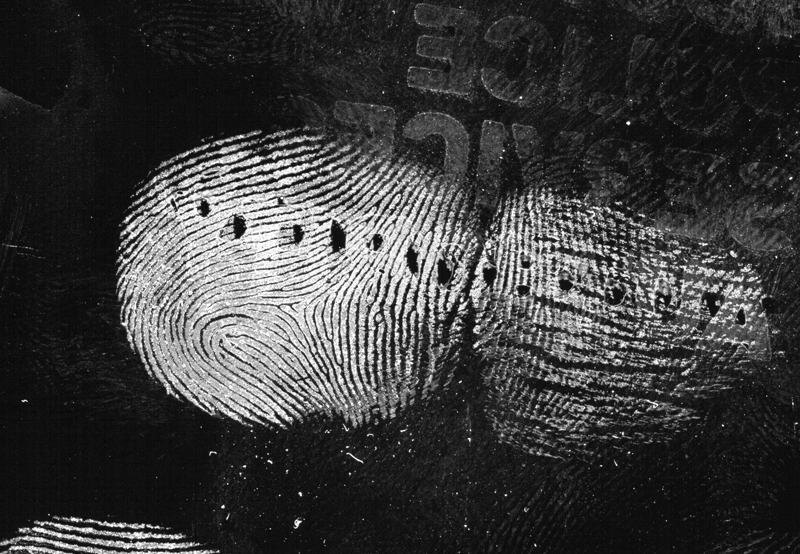
Weak traces are clearly visualized - Even the weakest traces become clearly visible when lifted with a black Gellifter. Its jet-black color and the high-gloss finish of its gelatin layer provide the right background to visualize the weakest traces.
Sharpness and rich contrast - The
jet black color of the black Gellifters and the high-gloss finish
provide a perfect combination of absorption and reflection.
Used with the right illumination, it achieves a crisp image in which the print is perfectly constrasted with the background.
Quality from start to finish - High standards of quality are maintained both in the production and packaging of Gellifters. We check every single Gellifter, just before packaging, to make sure that only the best ends up with you at the crime scene.
Unlike other lifting media, BVDA Gellifters have been especially developed for the lifting of fingerprints, shoeprints, dust marks and micro traces. The thick, non-aggressive, low-tack gelatin layer allows traces to be lifted from almost every surface, including porous material such as paper and cardboard.
- Untreated fingerprints
- Fingerprints developed with:
Powders (all types, even black)
Cyanoacrylate
SPR
Powdersuspension used on the adhesive side of certain tapes
- Fingerprints in/on latex and vinyl gloves
- Old fingerprints (relifting or improving)
- Postmortem fingerprinting
- Shoeprints in dust
- Muddy shoeprints on paper
- Earprints
- Micro traces
- Indented writing
This manual is intended to provide you with comprehensive directions for the use of our. We have tried to cover all possible points in order to help you obtain the best possible results.
This manual contains the following sections:
- Lifting fingerprints
- Longevity of lifted fingerprints
- Lifting cyanoacrylate developed fingerprints
- Lifting untreated fingerprints
- Special techniques in fingerprint lifting
- Lifting shoeprints
- Longevity of lifted shoeprints
- Photographing prints
- Traces of paint
- Taking samples of micro traces
- Bullet holes
- Blood
- Indented writing
- Effective temperature range
- Storage
General
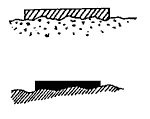 BVDA Gellifters have been especially developed to lift fingerprints, shoeprints, dust marks and micro traces. The thick, non-aggressive, low-adhesive gelatin layer makes it possible to lift traces from almost every surface, including porous materials such as paper or cardboard. Lifted prints can be taken along for photography or closer examination.
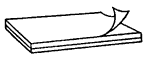 The black and the white Gellifters have a carrier of linen rubber. The transparent Gellifters have a clear polyester film which acts as a carrier. All Gellifters are protected by a transparent polyester film. Black and white Gellifters can easily be marked, since the white linen rubber backing can be written on. The transparent Gellifters have non-stick paper edges, which makes it easy to mark them and to lift the cover sheet.
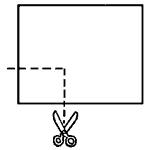 Hint: The Gellifters can easily be cut (before removing the cover sheet) with a pair of scissors to meet the needs of a particular job.
Lifted prints or marks can easily be photographed after removing the cover sheet. When the prints have been photographed, the cover sheet can be replaced (after carefully cleaning it to remove any possible contamination).
Lifting fingerprints
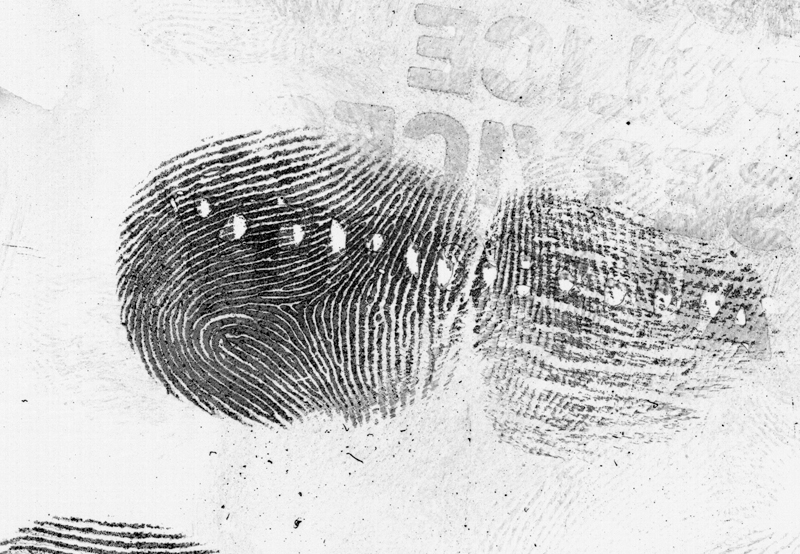
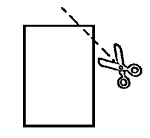 Powdered fingerprints can always be lifted with BVDA Gellifters. The kind of Gellifter which should be used, depends on the color of the powder and one's personal preference. With silver or gold powder, for instance, the black Gellifters can be used to improve contrast. It should be remembered that, where white and black lifters are used, a negative image of the fingerprint is obtained. Photography is then necessary to obtain the positive image. When using the transparant lifters, a positive image can be obtained directly by photographing the print through the transparent backing.
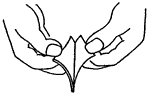 You will need to cut a large enough piece of Gellifter to lift powdered prints. We also recommend cutting off a small corner of the Gellifter, so as to be able to mark it and the cover sheet. There are two reasons for this. The first is that after lifting the print, the cover sheet can easily be replaced exactly over the Gellifter. The second reason is that if the Gellifter is always used in the same way while lifting - for instance with the cut edge in the top right-hand corner - the orientation of the lifted print can always be reconstructed. Before lifting the print, the cover sheet has to be removed and put aside upside down (to avoid contamination with dust). The safest and only recommended method for placing the Gellifter on the print is described in the next paragraph.
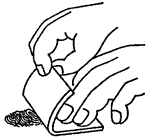 Place one edge of the Gellifter on the side of a developed print. Now carefully smooth down the upwardly slanted Gellifter while rubbing it with your thumb to avoid trapping any air bubbles. Then press the Gellifter firmly over the entire surface.
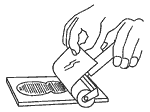
Once this is done, pick up the Gellifter, beginning at one of the corners, and place it on a flat horizontal surface to replace the cover sheet. For small prints this can be done in a similar fashion to the lifting procedure described above. For larger prints (e.g. palm prints), a roller is very convenient.
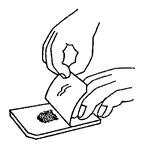 Trapping air bubbles will result in the creation of shallow craters, which will not destroy the print, but may cause problems when photographing it.
Longevity of lifted prints
 To the best of our knowledge, there is only one case where a powdered fingerprint will fade on a BVDA Gellifter. This is where BVDA gold powder (or lead carbonate but this is not very common anymore) is used. Lifted prints will fade and ultimately disappear in time. Fading will be noticeable after days or weeks, depending on the storage temperature (the lower the better). Prints developed with silver powders, on the other hand, are known to have been stored for several years without apparent fading. However, we always recommend photographing prints as soon as possible.
Lifting cyanoacrylate developed fingerprints
The black Gellifters can be used to lift fingerprints which are developed with cyanoacrylate. These lifters are a last resort where:
- a developed fingerprint is stained with a staining solution and the object seems to fluoresce in the same range as the dye;
- an object is contaminated and the contamination also absorbs the staining solution, thereby causing a loss of contrast between the print and background;
- a fingerprint is overdeveloped, or
- an object is partly porous and partly non-porous, e.g. a plastic bottle with a paper label.
Due to the extreme sensitivity of the black gelatin layer of the lifters, a fingerprint is easily copied onto the lifter by applying the lifter over the developed fingerprint. After removing the lifter, the fingerprint on the lifter can easily be viewed and photographed using coaxial lighting (as described in the section, "Indented writing").
Often the photographs produced after lifting a print with a black Gellifter are better and sharper than the same print photographed in fluorescence.
Hint: the second lift of the same fingerprint is often even better, because the first lift removes most of the background.
Lifting untreated fingerprints
Even fingerprints that have not been treated with powders or cyanoacrylate can be lifted with black Gellifters. An object on which prints are suspected, but which is difficult to treat (for example a plastic surface) can be searched for prints by applying a black Gellifter. Due to the extreme sensitivity of the black gelatin layer of the lifters, a fingerprint is easily copied onto the lifter by applying the lifter over the untreated fingerprint. Another example is a strong print that is already visible with the naked eye. To retain the perfect detail that these prints can have, they could be lifted before powdering is done.
Viewing and photographing these kinds of lifted prints is done in the way described under the heading "Indented writing": almost coaxial lighting.
Special Techniques for Lifting Fingerprints
Double lifting
Often, a print developed with fingerprint powder can be lifted twice. The second lift will in many cases be much clearer, although it will have less contrast. Another possibility is lifting for a second time after additional dusting.
Of course no rules can be given for these techniques, as much depends on experience. However, this is recommended for fingerprints on aluminium.
Improving older fingerprints
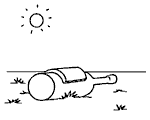 Fingerprints on objects which have been standing in sunlight or outside for longer periods are difficult to render visible. Because all the moisture has evaporated from the print, it hardly absorbs any powder. By attaching a piece of Gellifter to it for some minutes, the print can be rehumidified. Subsequently, the print can be dusted in the usual way and lifted with a fresh piece of Gellifter. Before using this method, ensure that the object in question has cooled down.
Lifting shoeprints
These are usually prints where the sole of the shoe acts as a stamp on the surface, thereby leaving an invisible print or one which is barely visible. The surfaces from which shoeprints can be lifted using BVDA Gellifters, are all smooth, hard surfaces such as floors, painted wood, paper, table-tops etc. For lifting shoeprints (dust marks), the large black Gellifters B-12000 (13x36 cm / 5.2x14.4") and B-12500 (18x36 cm / 7.2x14.4") are commonly used.
Footwear impressions that are not visible to the naked eye can be found in a number of ways. The best known method is to use a torch or floodlight at a low angle. Because shoeprints that are not even visible using low angle lighting, can be seen once they have been lifted with black Gellifters, another method is to cover the whole area where shoeprints are suspected, with Gellifters. We even supply extra large Gellifters 36x50 cm / 14.4x20") for this purpose. When the entire area is covered with Gellifters, reconstruction of the pattern is facilitated by drawing stripes over the seams of the Gellifters. Before picking up the Gellifters, it may be advantageous to let them lie on the surface for some minutes, so as to humidify the print.
Another method of searching for shoeprints that should be mentioned, is the use of electrostatic lifting.
Since electrostatic lifting leaves more than enough residue for subsequent lifting with a Gellifter, it can be used before gel lifting. Because electrostatic lifting also removes a lot of background dust, usually even better lifts are obtained with the Gellifter afterwards rather than using the latter on its own.
The procedure for applying the Gellifters is the same as that used to lift fingerprints (see above).
Even if shoeprints do not show up when lighting the surface and are not visible after lifting, they may become apparent when obliquely lighting the surface of the Gellifter in a dark room (after removing the cover sheet). Gellifters with no apparent prints in normal light, now show a highly detailed image. After photography, the cover sheet can be replaced following careful cleaning. A large roller is very convenient when replacing the cover sheet on these large Gellifters, so as to avoid trapping air bubbles.
Shoeprints which have been rendered visible with fingerprint powders, such as Magnetic Jet Black or Silver Special, can also be lifted with BVDA Gellifters. The color of the Gellifter used depends on the color of the fingerprint powder, e.g. a white lifter for dark color powder and a black lifter for light color powder.
WARNING: Avoid contamination of the Gellifters once the cover sheet has been removed. We recommend wearing dust-free clothing when handling and photographing the Gellifters.
Longevity of lifted shoeprints
Lifted shoeprints (dust marks) may slowly fade in time. For very weak prints this may be noticeable after storing them for a few days. This will depend on the temperature. The lower the temperature, the slower they will fade. This, however, should not be a concern, since lifted shoeprints can easily be photographed after removing the cover sheet. Oblique lighting will show details which are not visible before photography. So far, we know of no materials that fade on the Gellifter surface before adequate photographs have been taken.
For best results you should not replace the cover sheet. Transportation of the lifted print is of course more difficult then. We suggest using double-sided adhesive tape and a clean, shallow cardboard box, like the ones that photographic paper came in (inside surfaces covered with paper). Fading on storage is slower when the gellifter is left uncovered. Of course storing them in this way takes special measures.
When shoeprints contain very coarse material, e.g. sand, you may expect difficulties when replacing the cover sheet. Small air bubbles are likely to collect around coarse particles. If too many are present, the cover sheet will not adhere properly to the Gellifter. Several measures can be taken to avoid these problems. First of all, it may be advisable to photograph the shoeprint before lifting it. Secondly, the lifted print can be photographed on the crime scene before the cover sheet is replaced. Thirdly, instead of replacing the cover sheet, the Gellifter can be put in a clean box (e.g. a photographic paper box) and taped to the bottom. Fourthly, the cover sheet can be secured to the Gellifter with staples or adhesive tape, to prevent movement which would allow the coarse particles to destroy characteristic details.
Photographing Prints
Prints can easily be photographed with reproduction lighting in a dark room. The lighting (from e.g. a film spot at a 45° or higher angle) can come from one or two sides. The sensor of the camera has to be parallel to the Gellifter. All reflections should be avoided, therefore photographing should be done in a totally dark room. To avoid reflections, the camera should be shielded from the light source (e.g. with black cardboard). Next to the Gellifter, a ruler should be present, together with a case number or the like. Before photographing the print, the cover sheet must be removed. To avoid contamination, care should be taken to work in a dust-free environment (e.g. no smoking while photographing).
Shoeprints (dust marks) on black Gellifters are the most difficult to photograph. Schoeprints often contain "hot spots" that are not of evidential value and can become overexposed as long as relevant details of the print are visible in the image. As a result, the exposure time will often have to be set manually (with slow shutter speeds - long exposure times). In any case, the sensor of a digital camera never has enough pixels to capture a shoeprint in sufficient detail (a Schallamach pattern is more detailed than a fingerprint one is supposed to photograph at 1000 ppi). Also, it is not easy to get an even illumination of an object as large as a shoeprint. That is also the reason why the GLScan was made.
In the case of powdered shoeprints, much more light is reflected towards the camera. Therefore, shorter exposure times need to be used. The same holds for lifted (powdered) fingerprints. For reproduction of all the details in dust prints, the weakest ones (or the part farthest away from the spot) should provide the criterion for the exposure time. To be certain that a good reproduction is made, a cascade of three exposures is normally taken.
Due to the oblique lighting, the side of a Gellifter closest to the lamp receives more light than the other side. Therefore, it is advisable to put the side of the Gellifter with the weakest details closest to the light source.
Once you got a digital image you can use a photo editing program like Photoshop, GIMP, or Affinity (to name a few) to make details better visible. For example using levels, curves, or simply brightness and contrast, provided the image contains the information. When the exposure time is too short the information in the weakest parts might not have been captured.
To capture digital images of Gellifters the easiest solution is using a GLScan SP or GLScan FP. Then you get fast results in high resolution (a little over 1000 dpi for the SP) with even, strong lighting.
Paint Traces
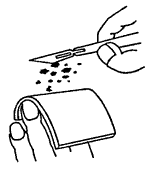 When paint left on a car by a hit-and-run driver has to be removed for examination, the white Gellifters can be used. After removing the cover sheet, adhere one edge of the Gellifter to the surface of the car directly under the spot containing the paint which is to be removed. Now scrape off this paint carefully with a scalpel.
The material you remove, will fall into the gap between the Gellifter and the surface of the car, or onto the Gellifter itself. When enough material has been removed, adhere the entire Gellifter to the surface of the car and rub it firmly all over. This way, all loose particles will adhere to the Gellifter. The Gellifter can then be removed and the cover sheet replaced. If necessary, the cover can be secured with staples or adhesive tape.
When paint left on a car by a hit-and-run driver has to be removed for examination, the white Gellifters can be used. After removing the cover sheet, adhere one edge of the Gellifter to the surface of the car directly under the spot containing the paint which is to be removed. Now scrape off this paint carefully with a scalpel.
The material you remove, will fall into the gap between the Gellifter and the surface of the car, or onto the Gellifter itself. When enough material has been removed, adhere the entire Gellifter to the surface of the car and rub it firmly all over. This way, all loose particles will adhere to the Gellifter. The Gellifter can then be removed and the cover sheet replaced. If necessary, the cover can be secured with staples or adhesive tape.
Taking Samples of Micro Traces
Due to the non-aggressive nature of the Gellifter, samples of micro traces and hair can be taken without fear of damaging the material. If it is necessary to remove micro traces from the Gellifter, the low tack facilitates their removal with the use of a scalpel or suitable pair of tweezers. Hair samples are taken with white Gellifters.
If an area is to be searched for micro traces, we recommend dividing it into squares (e.g. 20x20 cm, approximately 8x8 inches) and using a fresh piece of Gellifter for each square. The size of the Gellifter is actually dictated by the amount of contamination in the area to be investigated, since taking samples of dirt or large amounts of micro traces will result in a rapid loss of tack. A size of 8x8 cm (approximately 3x3 inches) usually suffices.
Bullet Holes in Window-panes
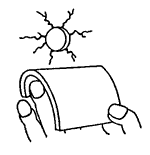 Panes containing bullet holes have a very specific pattern of cracks around the hole. After collecting residue around the hole, it is standard procedure to photograph it. However, this can be difficult due to reflections, a disturbing background or light sources. If this occurs, the hole and its surroundings can be powdered with Silver Special Powder (after the residue around the hole has been secured!).
The image can then be transferred to one or several pieces of Gellifter.
Panes containing bullet holes have a very specific pattern of cracks around the hole. After collecting residue around the hole, it is standard procedure to photograph it. However, this can be difficult due to reflections, a disturbing background or light sources. If this occurs, the hole and its surroundings can be powdered with Silver Special Powder (after the residue around the hole has been secured!).
The image can then be transferred to one or several pieces of Gellifter.
Blood
Blood stains can be lifted by using white Gellifters, for example. These are left for one or more minutes on the stain (to humidify) before they are picked up.
WARNING: Since gelatin is a protein, it will no longer be possible to analyse a stain once it has been lifted. Gelatin will interfere with the analysis of protein present in blood!
Photographing blood stains is the preferred method. On a non-absorbent surface, most prints will improve with chemical enhancement. In many situations, the treated print can still be lifted after chemical enhancement and photography. Lifting the stained print with a white Gellifter eliminates any background interference. The print must be photographed soon after it has been lifted (preferably less than one hour), as the dye from the enhanced print will diffuse across and into the gelatin layer of the Gellifter. This will not be noticeable until a couple of hours after the lift. The diffusion is irreversible and continues even in freezing temperatures. The Gellifter can therefore not be stored.
Lifting procedure: apply the white Gellifter carefully in order to avoid trapping air bubbles which could result in an incomplete transfer. Leave the Gellifter on the print for at least a couple of minutes to half an hour.
Suitable treatments which can be followed by lifting, include:
- Amido Black (methanol and water based)
- Leuco Crystalviolet (LCV)
- Crowle's stain
- Coomassie Blue
- Hungarian Red
- Acid Yellow 7
Note: Diaminobenzidine (DAB) will not transfer.
Fluorescence: The use of Hungarian Red has one further advantage. The lifted print strongly fluoresces on a white Gellifter under green light. A red barrier filter is used for viewing and photographing the fluorescence.
Indented writing
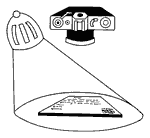 The black Gellifter can be used to great advantage to render indented writing visible. Especially effective on glossy papers (magazines), indented writing may be even more legible than when an ESDA or similar device is used. Viewing and photographing the mirror image of indented writing can be achieved with bright lighting, for example, a spotlight. The camera and the light should be as close together as possible, thereby almost creating coaxial lighting. Photograph in a dark room to avoid diffuse lighting.
Effective temperature range
The maximum temperature of an object from which a lifting can be effected, is 40 °C (104 °F), since the gelatin layer will melt between 40 °C and 45 °C (104 °C and 113 °F). Objects which are left to stand in the sun, soon exceed this temperature limit. These objects will first have to be cooled down before lifting is done.
The temperature in cars left in the sun can rise very high. Therefore, the Gellifters should certainly not be left in sunlit areas, but kept in shaded areas (e.g. under the front seat). In very hot climates it may be necessary to use a cool box.
The Gellifters can be used in freezing temperatures. The rubber of the black and white Gellifters can become somewhat less flexible, though the main problem at these temperatures is removing the cover sheet. This becomes more difficult at lower temperatures. It can be circumvented by keeping the Gellifters in a warmer environment prior to use in a very cold area. We have received reports of problem-free lifting at temperatures as low as -15 °C (5 °F).
Storage
Gellifters are normally stored at room temperature (20 °C, 68 °F), though storage in a refrigerator is not harmful. Black and white Gellifters have no known shelf life. However, most of our customers prefer to stock supplies for no more than six months to a year. The transparent Gellifters of shoeprint sizes slowly develop a brown tint. This is due to a chemical reaction between the gelatin and the ingredients added to give these transparent Gellifters a higher tack than white and black Gellifters. It becomes noticeable after a number of months storage at room temperature. Therefore, it is advisable to store these Gellifters in a refrigerator.
Upon prolonged storage outside the special packaging, especially in a humid environment, the Gellifters will attract some moisture, resulting in a small loss of tack. Due to the aluminium colored pouches in which the Gellifters are packaged, this will happen very slowly, even when storing them in a humid environment.
Due to the presence of (food-grade) preservatives in the gelatin layer, fungal growth on the Gellifters will not occur.
Notes
In 1998 a presentation at the IAI-conference was given of research by Theo Velders on the combined use of DFO and cyanoacrylate fuming/lifting with black gelatin lifters on surfaces which are partly porous and partly non-porous.
The handout of this presentation is available for download as a PDF-file (about 520 kB).
In September 2002 Jan de Koeijer of the NFI (Netherlands Forensic Institute) gave a presentation of research on the use of black gelatin lifters for the lifting of indented writing at the second EDEWG Conference, 25-28 September 2002, Bratislava, Slovak Republic.
This research was also presented at the ASQDE Conference, August 2002. A PDF file of his PowerPoint presentation in Bratislava (2 slides per page - 600K) is available for download.
In 2006 the article was published:
de Koeijer, J.A.; Berger, C.H.E.; Glas, W.; Madhuizen, H.T., "Gelatine Lifting, a Novel Technique for the Examination of Indented Writing", Journal of Forensic Sciences 2006, Vol. 51, nr. 4, p. 908-914, [doi:10.1111/j.1556-4029.2006.00158.x]
Information on different techniques for footwear mark recovery (including gelatin lifters) was published by the Home Office Scientific Development Branch in the Fingerprint and Footwear Forensics Newsletters of May 2008(Publication No. 24/08) and February 2010 (Publication No. 6/10). Authors: Dr Helen Bandey and Dr Stephen Bleay (can be downloaded from GOV.UK).